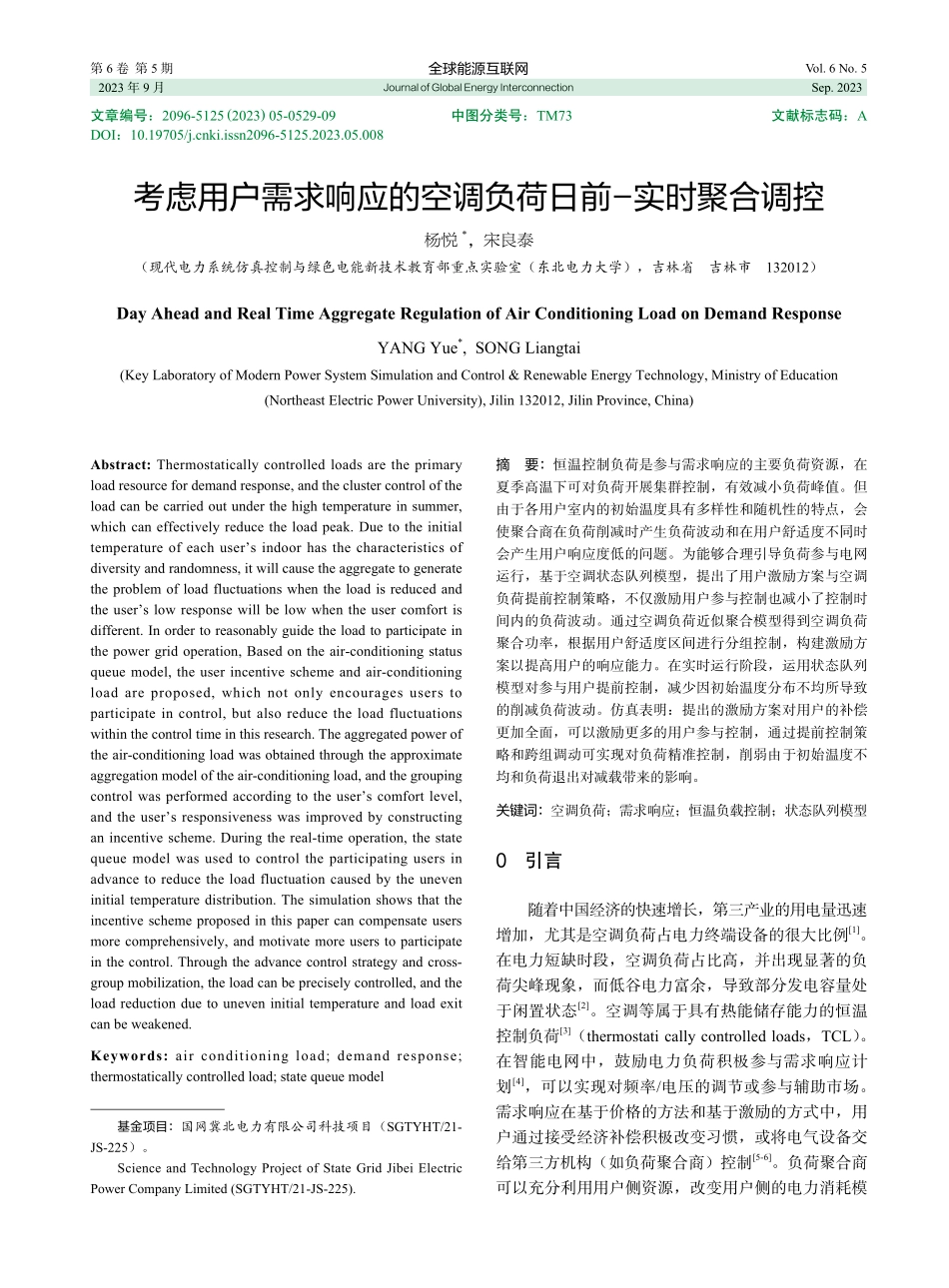
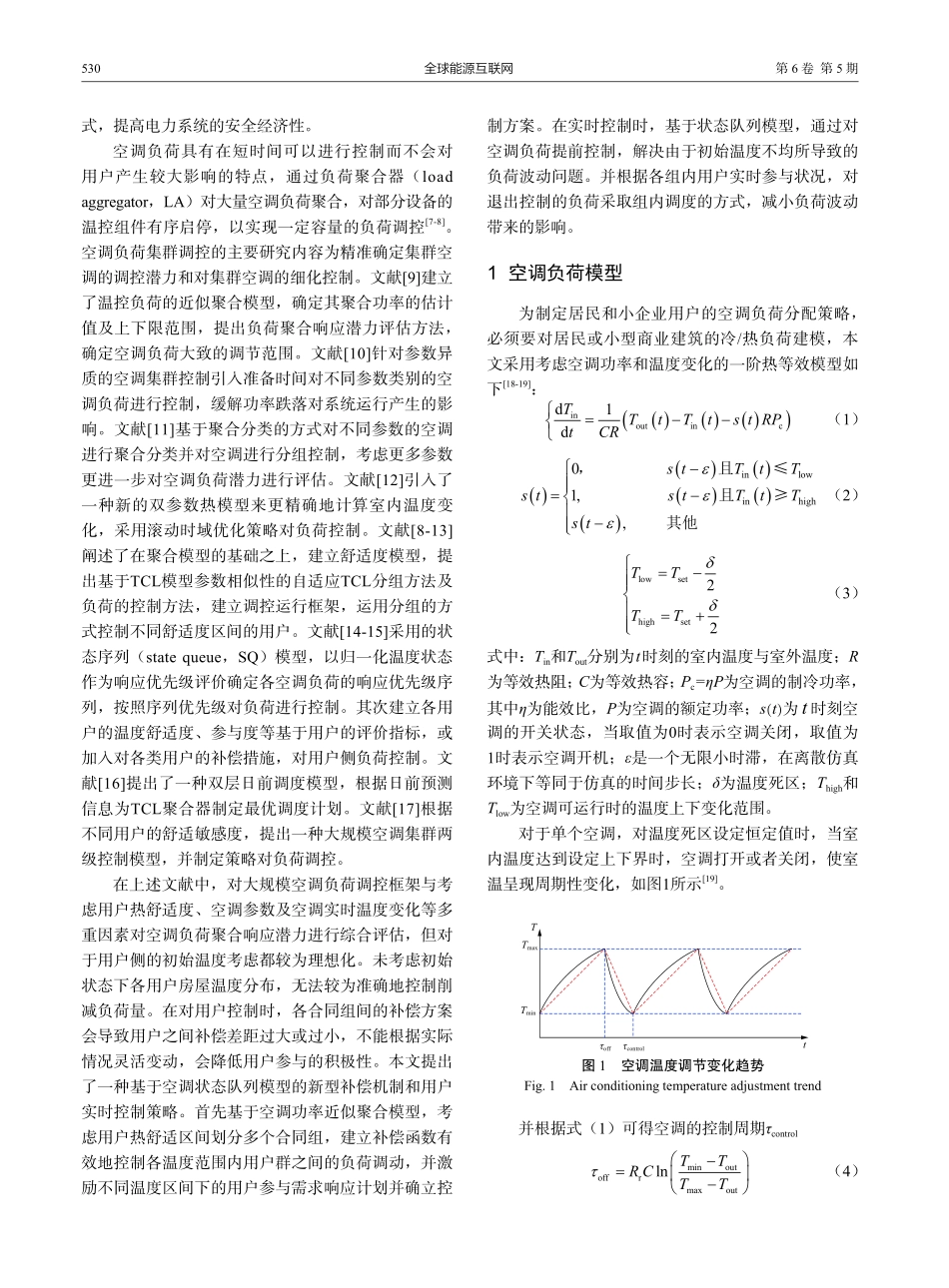
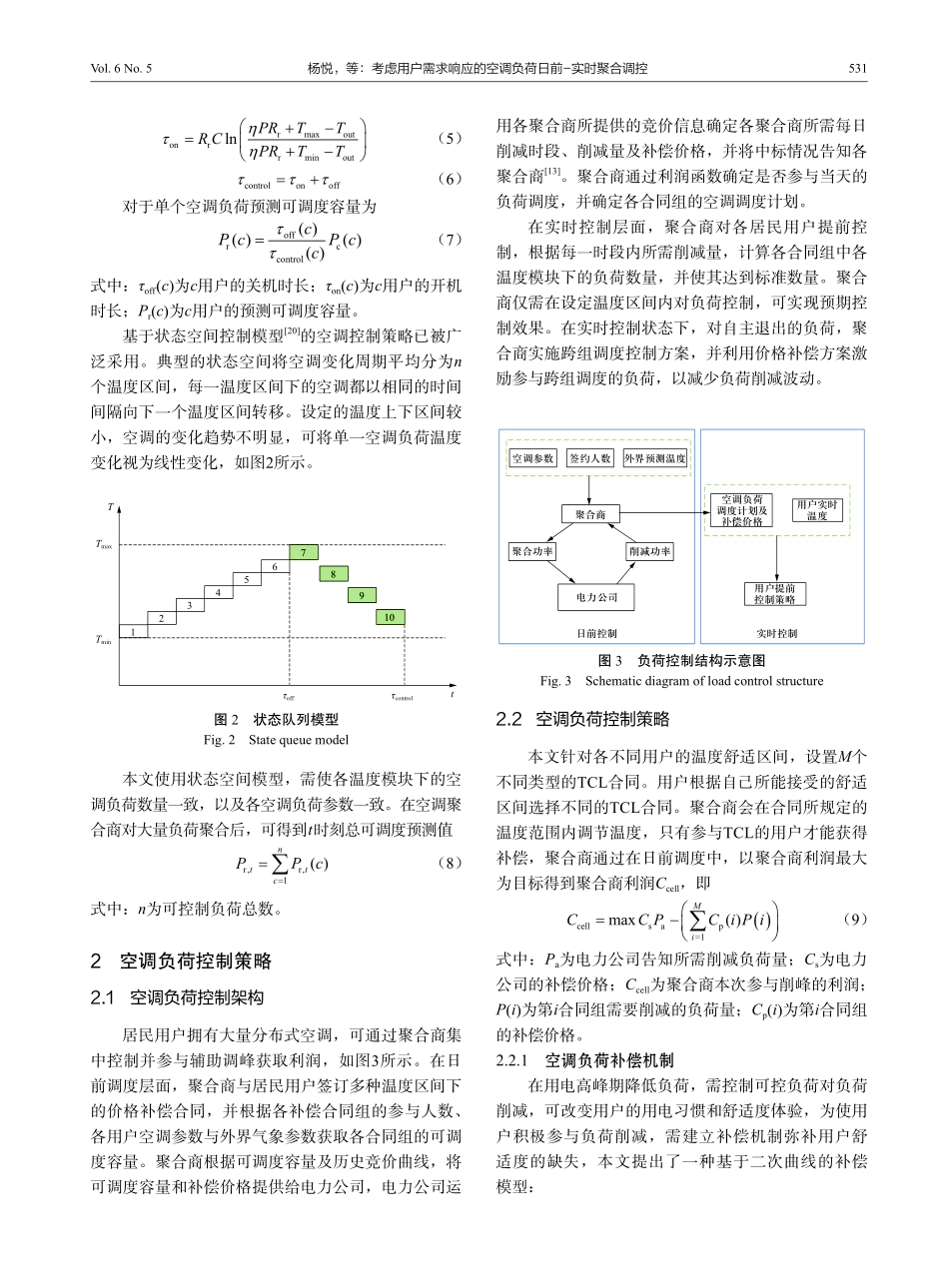
Abstract:Thermostaticallycontrolledloadsaretheprimaryloadresourcefordemandresponse,andtheclustercontroloftheloadcanbecarriedoutunderthehightemperatureinsummer,whichcaneffectivelyreducetheloadpeak.Duetotheinitialtemperatureofeachuser’sindoorhasthecharacteristicsofdiversityandrandomness,itwillcausetheaggregatetogeneratetheproblemofloadfluctuationswhentheloadisreducedandtheuser’slowresponsewillbelowwhentheusercomfortisdifferent.Inordertoreasonablyguidetheloadtoparticipateinthepowergridoperation,Basedontheair-conditioningstatusqueuemodel,theuserincentiveschemeandair-conditioningloadareproposed,whichnotonlyencouragesuserstoparticipateincontrol,butalsoreducetheloadfluctuationswithinthecontroltimeinthisresearch.Theaggregatedpoweroftheair-conditioningloadwasobtainedthroughtheapproximateaggregationmodeloftheair-conditioningload,andthegroupingcontrolwasperformedaccordingtotheuser’scomfortlevel,andtheuser’sresponsivenesswasimprovedbyconstructinganincentivescheme.Duringthereal-timeoperation,thestatequeuemodelwasusedtocontroltheparticipatingusersinadvancetoreducetheloadfluctuationcausedbytheuneveninitialtemperaturedistribution.Thesimulationshowsthattheincentiveschemeproposedinthispapercancompensateusersmorecomprehensively,andmotivatemoreuserstoparticipateinthecontrol.Throughtheadvancecontrolstrategyandcross-groupmobilization,theloadcanbepreciselycontrolled,andtheloadreductionduetouneveninitialtemperatureandloadexitcanbeweakened.Keywords:airconditioningload;demandresponse;thermostaticallycontrolledload;statequeuemodel摘要:恒温控制负荷是参与需求响应的主要负荷资源,在夏季高温下可对负荷开展集群控制,有效减小负荷峰值。但由于各用户室内的初始温度具有多样性和随机性的特点,会使聚合商在负荷削减时产生负荷波动和在用户舒适度不同时会产生用户响应度低的问题。为能够合理引导负荷参与电网运行,基于空调状态队列模型,提出了用户激励方案与空调负荷提前控制策略,不仅激励用户参与控制也减小了控制时间内的负荷波动。通过空调负荷近似聚合模型得到空调负荷聚合功率,根据用户舒适度区间进行分组控制,构建激励...