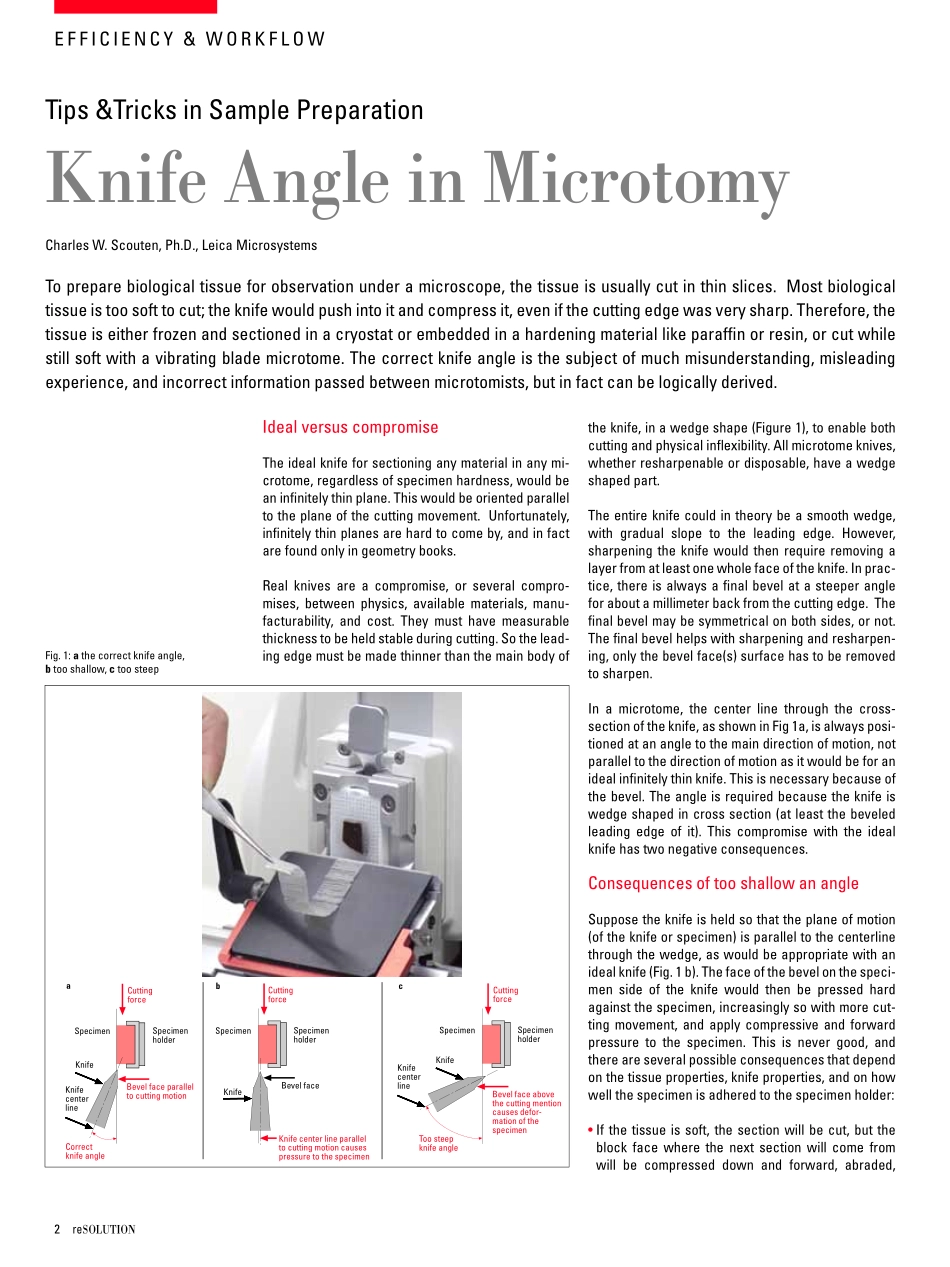
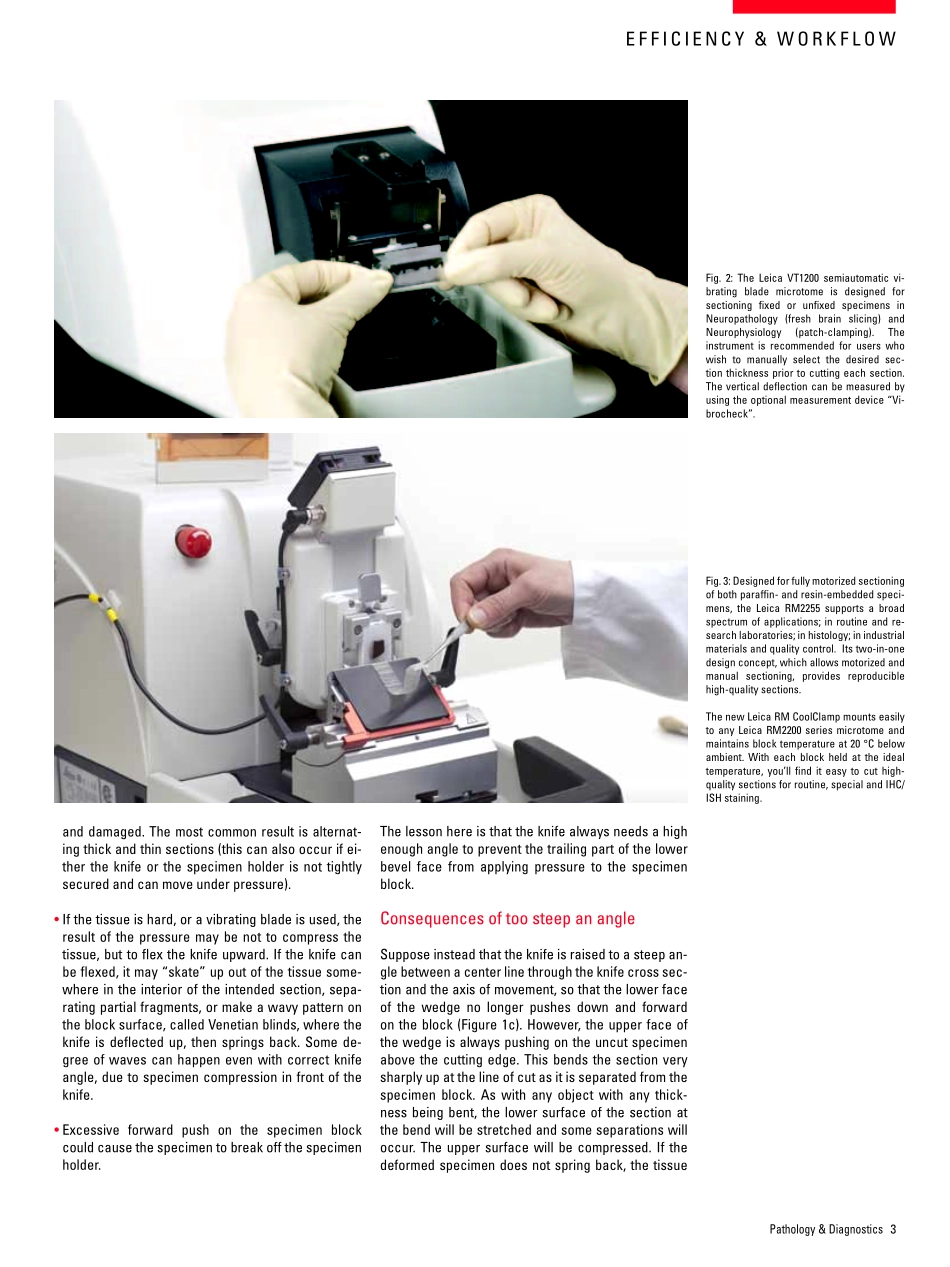
No.05customermagazineforpathology&diagnosticseuropeaneditionresolutioNKnifeangleinmicrotomytips&tricksinsamplePreparationextract2resolutioNefficiency&WorkfloWTips&TricksinSamplePreparationKnifeangleinMicrotomycharlesW.Scouten,Ph.D.,leicaMicrosystemsTopreparebiologicaltissueforobservationunderamicroscope,thetissueisusuallycutinthinslices.Mostbiologicaltissueistoosofttocut;theknifewouldpushintoitandcompressit,evenifthecuttingedgewasverysharp.Therefore,thetissueiseitherfrozenandsectionedinacryostatorembeddedinahardeningmateriallikeparaffinorresin,orcutwhilestillsoftwithavibratingblademicrotome.Thecorrectknifeangleisthesubjectofmuchmisunderstanding,misleadingexperience,andincorrectinformationpassedbetweenmicrotomists,butinfactcanbelogicallyderived.idealversuscompromiseTheidealknifeforsectioninganymaterialinanymi-crotome,regardlessofspecimenhardness,wouldbeaninfinitelythinplane.Thiswouldbeorientedparalleltotheplaneofthecuttingmovement.Unfortunately,infinitelythinplanesarehardtocomeby,andinfactarefoundonlyingeometrybooks.realknivesareacompromise,orseveralcompro-mises,betweenphysics,availablematerials,manu-facturability,andcost.Theymusthavemeasurablethicknesstobeheldstableduringcutting.Sothelead-ingedgemustbemadethinnerthanthemainbodyoftheknife,inawedgeshape(figure1),toenablebothcuttingandphysicalinflexibility.Allmicrotomeknives,whetherresharpenableordisposable,haveawedgeshapedpart.Theentireknifecouldintheorybeasmoothwedge,withgradualslopetotheleadingedge.However,sharpeningtheknifewouldthenrequireremovingalayerfromatleastonewholefaceoftheknife.inprac-tice,thereisalwaysafinalbevelatasteeperangleforaboutamillimeterbackfromthecuttingedge.Thefinalbevelmaybesymmetricalonbothsides,ornot.Thefinalbevelhelpswithsharpeningandresharpen-ing,onlythebevelface(s)surfacehastoberemovedtosharpen.inamicrotome,thecenterlinethroughthecross-sectionoftheknife,asshowninfig1a,isalwaysposi-tionedatanangletothemaindirectionofmotion,notparalleltothedirectionofmotionasitwouldbeforanidealinfinitelyt...