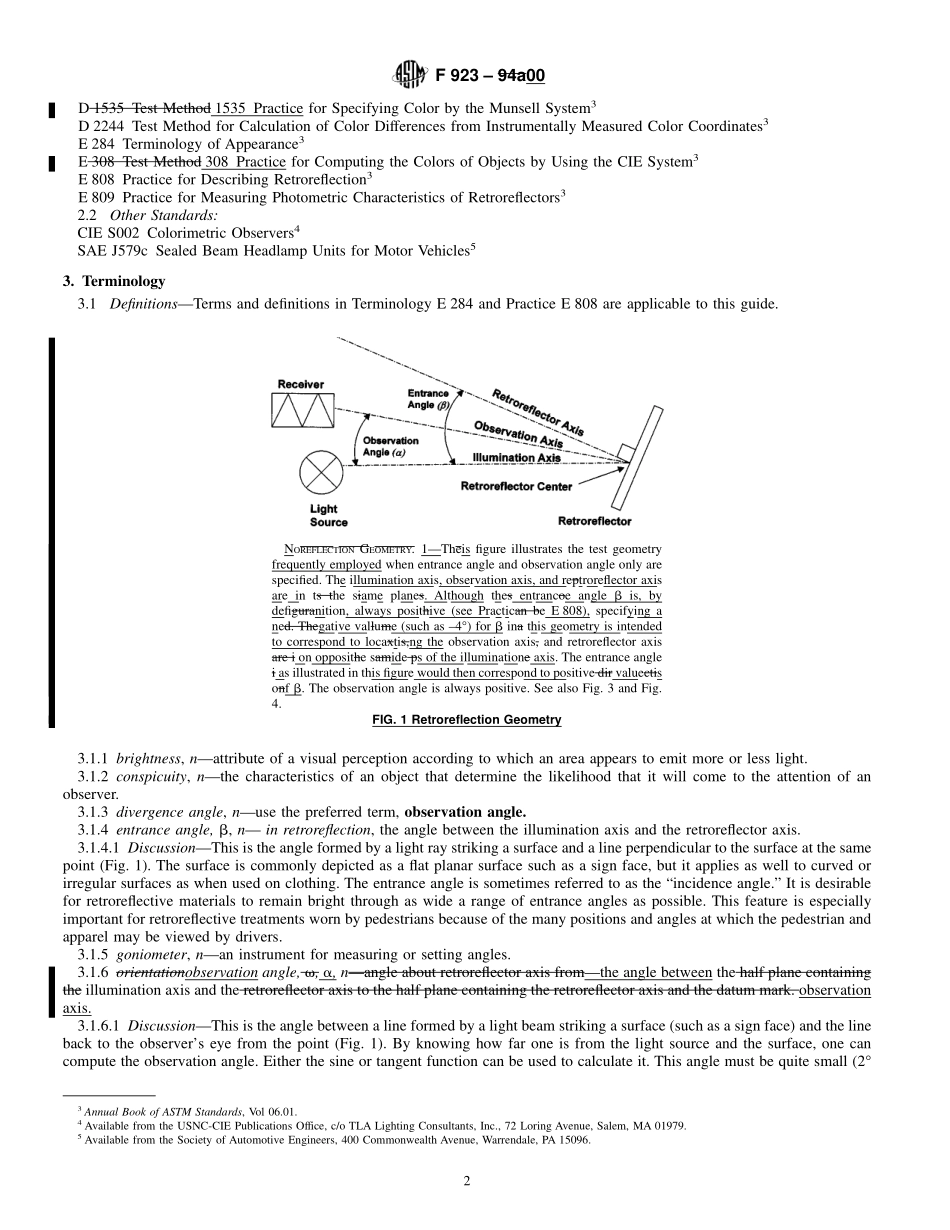
Designation:F923–94a00StandardGuidetoPropertiesofHighVisibilityMaterialsUsedtoImproveIndividualSafety1ThisstandardisissuedunderthefixeddesignationF923;thenumberimmediatelyfollowingthedesignationindicatestheyearoforiginaladoptionor,inthecaseofrevision,theyearoflastrevision.Anumberinparenthesesindicatestheyearoflastreapproval.Asuperscriptepsilon(e)indicatesaneditorialchangesincethelastrevisionorreapproval.INTRODUCTIONFormanyyearstheproblemofpedestrian–motorvehiclecollisionshasbeenamajoroneintheUnitedStatesandtherestoftheworld.IntheU.S.,inthelastthreeyearsforwhichdataareavailable(1988–1990),therehavebeenontheaverageabout8200pedestrianfatalitiesperyear,ofwhichabout54%occurredatnight(1).2Inaddition,over100000pedestrianswereinjuredbymotorvehicleseachyear(2).Lackofadequatevisibilityandconspicuityofpedestriansatnightandduringthedayisconsideredtoplayadirectroleinmanyoftheseaccidents.Aninvestigationofpedestrianaccidentsliststhefollowingsixdriverandpedestrianactionsnecessaryforsafetravel:search,detection,evaluation,decision,humanaction,andvehicleaction(3).Researchshowsthatpedestrianstypicallyoverestimatetheirvisibility(4).Sincetheaveragepedestrianisnotlikelytobeabletodeterminemeansforestablishingadequatevisibility,guidelinesareneededtoimprovevisibilityandconspicuityofpedestrians.Guidelinesand,infact,standards(5,6)havebeenprovidedforotherroadusers(forexample,trucks,passengercars,motorcycles,andbicycles)inanattempttomeetvisibilityneeds,butnotforpedestrians.Thisguideprovidesgeneralprinciplesfortheenhancementofpedestrianvisibilitybothatnightandduringtheday.Theseprinciplesalsogenerallyapplytoanyoneelseexposedtomotorvehicles,includingconstructionworkers,airportworkers,bicyclists,andmotorcyclists.1.Scope1.1Thisguidecoversthephysicalprinciplesandvariablesinvolvedintheperformanceandselectionofhighvisibilitymaterialsforindividualsafety.1.2Itisthepurposeofthisguidetoexaminetheprinciplesonwhichfuturestandardsrelatingtoindividualsafetymaybeused.However,thisguidedoesnotsetminimumstand...